What the Name, Port and IMO Number Painted on a Ship's Stern Actually Mean
Three lines of white paint on the back of a container ship, stacked one under the other. Everyone’s seen them. Almost nobody reads them. They’re each doing a different job.
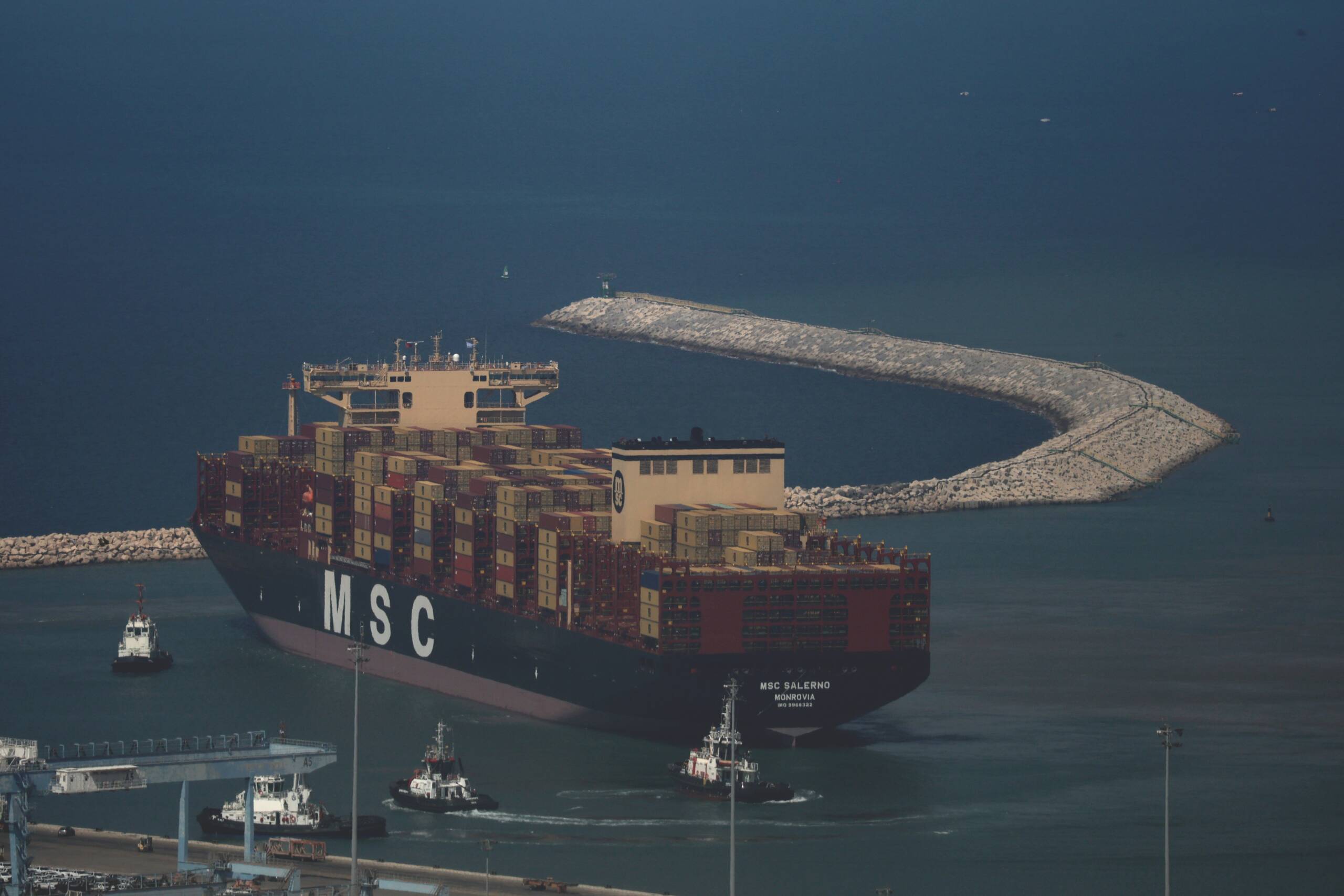
Top line: the ship’s name. This is the least reliable thing on the hull. Names change constantly. A ship gets sold, chartered out, absorbed into a different carrier’s fleet, and it gets a fresh coat of paint on the stern along with the new charter. The name tells you who’s operating her right now and nothing more.
Second line: the port of registry. Not where she was built, not where she’s based, not where the owner lives, and usually not a place the ship has ever visited. It’s the port associated with the flag state’s register. Monrovia shows up on thousands of hulls because Liberia runs the world’s second-largest registry, and that registry is actually administered out of an office in Virginia. The ship is legally a piece of Liberia wherever she happens to be floating. That’s the whole point of the line: it tells you which country’s law applies on board, which safety inspections she answers to, and which court hears the dispute when something goes wrong.
Third line: the IMO number. This is the one that doesn’t lie. Seven digits, assigned once when the hull is built, and it never changes. New owner, new name, new flag, new paint job on everything else, same IMO number until she’s scrapped. It’s the vehicle identification number of the sea. If you want to know whether the ship in front of you has a history of detentions, or was under different colours last year, this is the number you look up.
There’s a checksum built into it, which is a nice touch. Multiply the first six digits by 7, 6, 5, 4, 3 and 2 in order, add the results, and the last digit of the total is the seventh digit. Type one wrong and the number simply doesn’t validate.
Why painted there
It’s a rule, not a convention. SOLAS requires the IMO number to be permanently marked somewhere visible from outside, and the stern qualifies. Minimum letter height is 200mm externally. There’s a second copy inside the ship, at least 100mm high, on a bulkhead in a machinery space where it survives a fire and can’t be painted over by an owner who’d rather the hull’s past stayed private.
The stern is the practical choice because it’s the view you get from a pilot boat, a patrol vessel, or a port office window. Bow markings are for the name and the draft. The stern is where the paperwork lives.
Three lines. One is marketing, one is jurisdiction, one is identity.